
By Rupesh Kumar
Published: November 21, 2025
Last Updated: February 26, 2026
Introduction
A few years ago, I did not know how to manage daily expenses properly. I was earning fine, but still I felt stressed before month end. I noticed I was spending money daily without tracking it. This problem happened to me because I was not using any daily expense tracker. Small amounts like ₹20 tea, ₹50 snacks, and ₹199 online payments were adding up quietly.
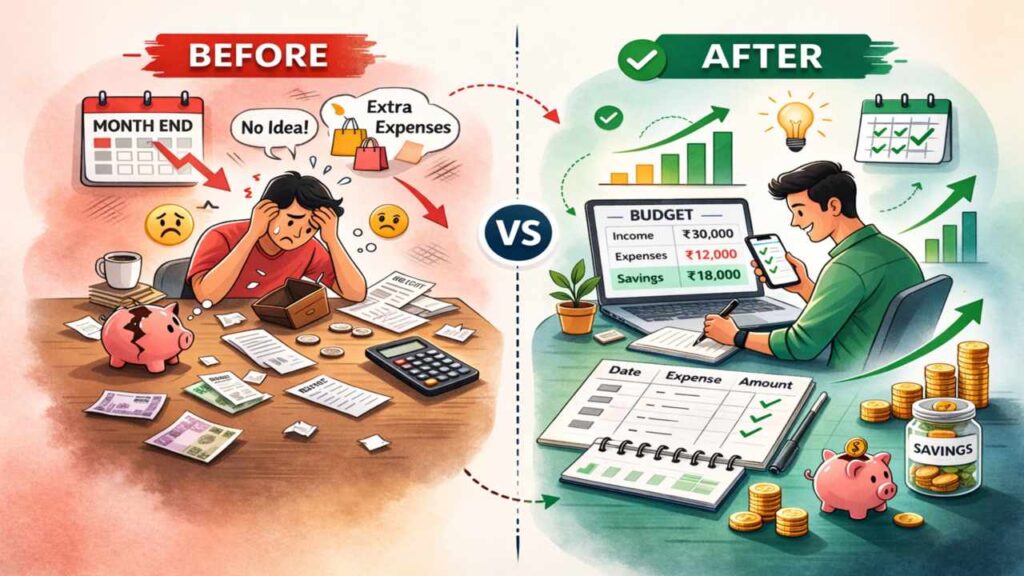
When I finally started using a simple daily spending tracker, everything changed. I wrote down every expense in a notebook. Within two weeks, I clearly understood where my money was going. It became easier to manage expenses without feeling pressure. I did not stop enjoying life, I just became more aware.
If you are confused about how to manage daily expenses, don’t worry. I will guide this step by step in a simple and practical way. Start tracking today, and you will slowly feel more control and less stress about money.
How to Manage Daily Expenses and Save Money – 10 Easy Tips
Here are the Top 10 Tips to Manage Daily Expenses and Save Money (simple, practical, and easy to follow):
1. Track Every Rupee (Even ₹10 Matters)
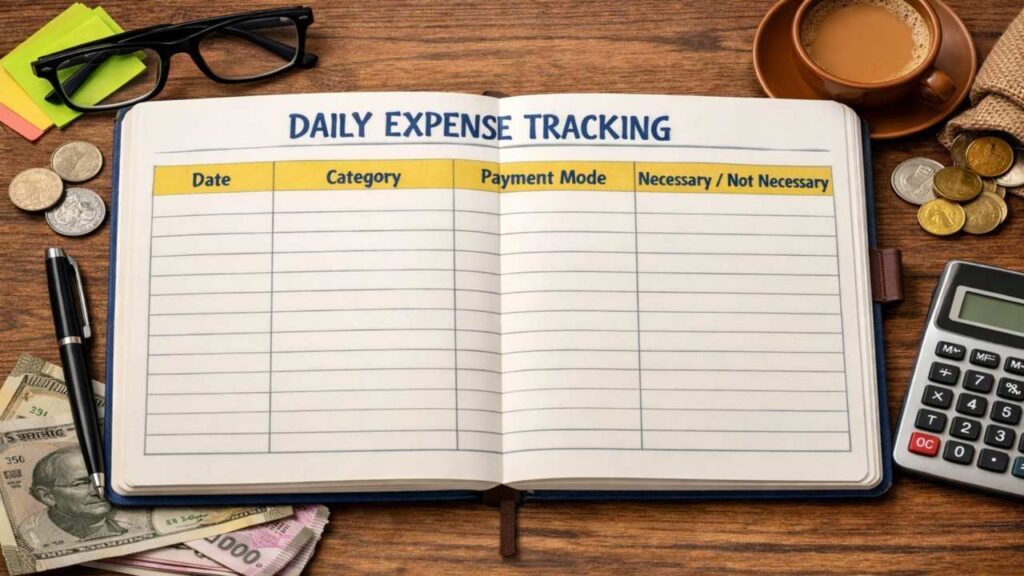
Many people ignore small expenses like ₹10 tea, ₹20 snacks, or ₹50 auto fare. But I noticed that these small daily expenses slowly become ₹2,000–₹3,000 per month without realizing it.
If you track every rupee — even ₹10 — you become more aware of your spending habits. Write it down in a notebook or use a simple expense tracker tool daily.
👉 Small savings daily = Big savings monthly.
Example:
₹10 × 30 days = ₹300
₹50 × 30 days = ₹1,500
Small amounts matter more than you think
2. Set a Daily Budget (Not Just Monthly)
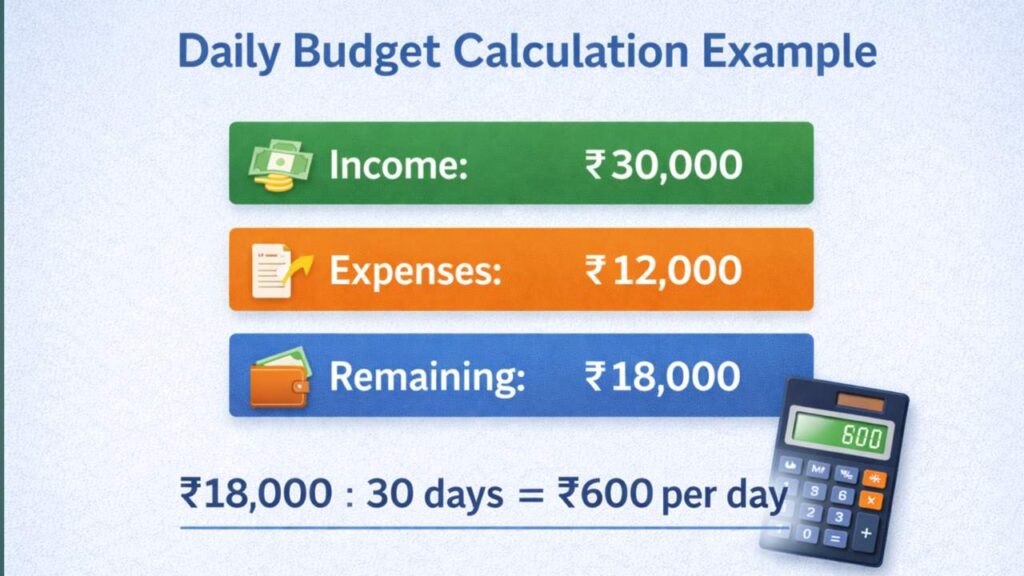
Most people focus only on monthly planning, but daily control is more effective. I noticed that when I divided my monthly limit into a daily amount, I stopped overspending automatically.
Example :-
- Income :- ₹30,000
- Fixed bills :- ₹12,000
- Remaining :- ₹18,000
- Daily limit :- ₹18,000 ÷ 30 = ₹600 per day
Now your goal is simple — stay within ₹600 daily to manage daily expenses effectively.
👉 When you control daily spending, monthly savings happen naturally
3. Keep Spending Categories Simple
To manage daily expenses properly, don’t create too many complicated categories. Keep it simple and easy to track. I noticed that when I reduced my categories to just 6–7 main types, tracking became faster and more consistent.
You can use simple categories like:
- Food
- Travel
- Bills
- Shopping
- Health
- Entertainment
- Others
Simple categories help you clearly see where your money goes and make it easier to manage daily expenses without confusion
4. Sunday 10-Minute Review Habit
If you truly want to manage daily expenses, take just 10 minutes every Sunday to review your weekly spending. I noticed that this small weekly check helped me catch unnecessary expenses before they became a monthly problem.
During your 10-minute review:
- Check total weekly spending
- Identify unnecessary expenses
- Adjust next week’s daily budget
- Set a small saving goal
👉 A simple Sunday review keeps your spending under control and helps you manage daily expenses consistently
5. Follow the 24-Hour Rule
If you want to manage daily expenses better, start following the 24-hour rule. This means whenever you feel like buying something non-essential, wait for 24 hours before making the purchase.
I noticed that many things I wanted felt important at that moment, but after one day, I realized they were not necessary. This simple habit reduces impulse spending and protects your savings.
👉 Waiting 24 hours can save thousands of rupees every month and helps you manage daily expenses wisely
6. Control Online Food Orders
Ordering food is convenient—but expensive. Home-cooked meals save both money and health. Even 3–4 days a week makes a big difference.
Try these practical tips :-
- Fix a weekly order limit (e.g., only twice a week)
- Avoid ordering after 8 PM (most impulse orders happen at night)
- Prepare 1–2 quick meals at home
Example :-
If you reduce 3 Swiggy/Zomato orders weekly:
Savings per month = ₹1,200–₹2,000
7. Check All Subscriptions
To manage daily expenses effectively, review all your subscriptions regularly. Many people forget about auto-debit payments like OTT apps, gym plans, learning apps, or premium tools. I noticed that I was paying for 2–3 services that I rarely used.
Take 10 minutes and:
- List all active subscriptions
- Cancel unused services
- Downgrade expensive plans
- Turn off auto-renewal if not needed
👉 Small subscription cuts can save ₹500–₹2,000 per month and help you manage daily expenses smarter
8. Avoid the ₹199 / ₹299 Trap
This happened to me many times. I used to think ₹199 is nothing. So I bought small offers without thinking. I noticed that at month end, these small payments became ₹2,000–₹3,000.
That’s when I understood the trap. ₹199 looks small, but repeated spending hurts the budget.
Now I always pause and ask — do I really need this?
Small amounts matter. Control them first
9. Do Weekly Grocery Shopping
Earlier I went daily.
Result?
- Extra biscuits
- Cold drinks
- Impulse snacks
Weekly shopping:
- Saves money
- Saves time
- Reduces unnecessary items
When you shop once a week with a clear plan, you avoid impulse buying and manage daily expenses better
10. Use Simple Tools (Don’t Overcomplicate)
You don’t need complicated finance apps.
Simple tools work best:
- Notebook
- Google Sheet
- Basic daily expense tracker
- Monthly income and expense tracker
Consistency matters more than fancy design.
Monthly vs Weekly Budget: Which Works Better?
| Monthly Budget | Weekly Budget |
|---|---|
| You plan total expenses for the whole month. | You divide your money into 4 small weekly parts. |
| Good for salary-based income. | Better for controlling daily spending. |
| Hard to track small daily expenses. | Easy to adjust quickly if overspending happens. |
| Overspending is noticed at month end. | Overspending is noticed within 7 days. |
| Requires strong self-control. | Gives better short-term control. |
My Experience:
I noticed monthly budgeting looks good on paper, but weekly budgeting helped me control spending better. Weekly check makes you more alert and disciplined
Real Example: How a Student Saved ₹4,500 in One Month
Riya, a college student, tracked her expenses for 30 days.
Before Tracking:
| Category | Monthly Spend |
|---|---|
| Snacks | ₹1,500 |
| Food Orders | ₹2,200 |
| Travel | ₹1,200 |
| Random Shopping | ₹1,800 |
After Using Daily Spending Tracker
| Category | Reduced To |
|---|---|
| Snacks | ₹800 |
| Food Orders | ₹1,000 |
| Travel | ₹1,000 |
| Random Shopping | ₹1,400 |
She saved ₹4,500 in the first month without changing her lifestyle drastically.
If a student can do it, anyone can.
Common Mistakes People Make
I’ve seen — and done — all of these myself:
1. Not Tracking Daily Spending :-
I used to think, “It’s just ₹50 for tea and snacks.” But 50 every day adds up to ₹1,500 a month. Tracking made me realize these small leaks.
2. Using Credit Cards Casually :-
Swiping feels easy, but when the bill comes, it hurts. Earlier, I used my card for everything. Now I use it only for planned expenses.
3. Ignoring Cash Withdrawals :-
When we withdraw ₹2,000, we often forget where it went. Writing it down or noting it in an app helps a lot.
4. Shopping Without a List :-
Going to Big Bazaar without a list used to be a disaster for me. I’d go for rice and come back with chips, soap, and unnecessary offers.
5. No Emergency Cushion :-
When an unexpected repair or medical bill came, I used to panic. Now, keeping even ₹5,000 aside as a safety net gives a lot of relief.
6. Thinking Budgeting Means Sacrifice :-
I used to believe budgeting kills fun. But it actually helps you enjoy guilt-free spending on things that matter most.
Limitations & Disclaimer
Managing daily expenses can reduce stress and improve money control, but it is not a quick solution to all financial problems. Emergencies and income changes can affect your budget. These tips are for basic expense management only, not professional financial or investment advice. Adjust them according to your personal situation.
Frequently Asked Questions
1. Do I need to use an app for tracking expenses?
Not at all. A simple notebook or WhatsApp message to yourself works perfectly.
2. What if I forget to note some expenses?
No worries. Just try to recall at night and write roughly. The goal is awareness, not accuracy.
3. How much should I save every month?
Start small — even ₹500 is fine. Once you get control over spending, increase it gradually.
4. Is cash better than UPI for daily spending?
Both are fine. But using cash helps control small impulsive spends.
5. Should I stop all “fun” spending?
No. Keep things that make you happy. Just reduce the wasteful ones.
Conclusion
From my own experience, learning to manage daily expenses changed my mindset about money. I noticed that small daily habits made a big difference over time. Once I started tracking and controlling my daily spending, I felt more confident and less stressed. Saving money is not about strict restrictions, it is about awareness and consistency. Start small, stay regular, and slowly you will see positive results in your financial life.
If you want to understand budgeting in more depth, Kotak Mahindra Bank provides a clear guide on the basics of managing money.
You can also read this :-
10 Smart Ways to Save Money Every Month in 2026